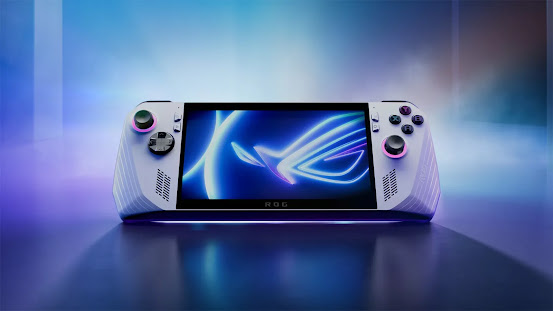
AMD Ryzen Z1 Extreme and Windows 11 powered ROG Ally handheld console launches in India.


 Asus has launched its first handheld gaming PC, the Asus ROG Ally, in India. This gaming device is powered by Windows 11 and features a 7-inch LCD display. It is designed to handle AAA titles as well as simpler games, supporting a 1080p resolution. The ROG Ally is available in two variants globally, equipped with AMD's new Z1 and Z1 Extreme chipsets. The Indian variant comes with the Z1 Extreme chip, 16GB of RAM, and 512GB of inbuilt storage. It boasts a 40Whr battery that supports fast charging at 65W through a USB Type-C port.

In India, the Asus ROG Ally is priced at Rs. 69,990 for the RC71L model with the AMD Z1 Extreme processor. It can be purchased from the Asus e-shop, Flipkart, as well as Asus and ROG stores. Asus is offering a cashback of Rs. 2,000 on no-cost EMI transactions with select banks. Customers who buy the ROG Ally before July 15 will also receive a case worth Rs. 2,000 for just Rs. 1.

Moving on to the specifications and features, the Asus ROG Ally runs on Windows 11 and features a 7-inch full-HD IPS LCD display with a 120Hz refresh rate, 7ms response time, and up to 500 nits of peak brightness. The display is protected by Corning Gorilla Glass Victus and Gorilla Glass DX.

The RC71L model in India is powered by an octa-core 4nm AMD Z1 Extreme processor and AMD RDNA3 graphics with 4GB of VRAM (expandable up to 8GB). It comes with 16GB of LPDDR5 RAM and 512GB of NVMe storage, which can be expanded using a UHS-II MicroSD 4.0 card slot.

In terms of connectivity, the Asus ROG Ally supports Wi-Fi 6E and Bluetooth 5.2. It also features a USB Type-C port for charging the 40Whr battery, which supports fast charging at 65W. The device includes two stereo speakers with Dolby Atmos and an array microphone with AI-backed noise cancellation technology. It is equipped with thumbsticks, ABXY buttons, a D-pad, analogue triggers, and bumpers for enhanced gaming control. The dimensions of the device are 280 x 111 x 21.2mm, and it weighs 608g.

Comments

Popular posts from this blog

ChatGPT: An Advanced AI-Powered Chatbot for Natural Language Processing and Generative Conversations

ChatGPT: Revolutionizing the World of Conversational AI About ChatGPT ChatGPT is a state-of-the-art conversational AI model developed by OpenAI. It has been trained on a large corpus of text data, which enables it to generate human-like responses to a wide range of questions and topics. The model is designed to understand natural language inputs and generate relevant, coherent and contextually appropriate responses. With its advanced language processing capabilities, ChatGPT can be used for various applications such as customer service, virtual assistants, and conversational interfaces. It is one of the largest and most powerful language models available and continues to advance the field of conversational AI. How To Use? ChatGPT can be used in a variety of ways, including through APIs provided by OpenAI, or through pre-built integrations with platforms like Slack, Microsoft Teams, and Discord. Here is a general outline of how to use ChatGPT: Obtain an API Key: To use ChatGPT, ...

MediaTek's introduction of the Dimensity 7200 chipset marks the debut of the Dimensity 7000 series.

  Mediatek's latest addition is the Dimensity 7200 SoC, which heralds the debut of the Dimensity 7000 series. Designed for mid-range 5G smartphones, the chipset prioritizes improved performance for gaming and photography. This follows the company's recent launch of the Helio G36 SoC, an affordable option. Here are the essential details to note The Dimensity 7200 chipset utilizes TSMC's second-generation 4nm process, which is also present in the high-end Dimensity 9200 SoC. Its octa-core CPU comprises two Arm Cortex-A715 cores clocked up to 2.8GHz and six Cortex-A510 cores, all complemented by the Arm Mali-G610 MC4 GPU. To enhance gaming, the Dimensity 7200 chipset comes equipped with MediaTek HyperEngine 5.0 technology, which leverages AI-based Variable Rate Shading (VRS), smart CPU and GPU resource optimization, and other features to optimize power consumption and provide a superior gaming experience. In addition, the chipset's MediaTek Imagiq 765 and 14-bit HDR-ISP te...

Memory Types: What are the differences between LPDDR5 and DDR5?

  DRAM can be classified into two main categories: DDR and LPDDR, which stand for Dual Data Rate and Low Power Dual Data Rate, respectively. DDR is commonly employed in desktop computers and high-end laptops, whereas LPDDR is primarily utilized in smartphones and ultrabooks. The latest CPUs from Intel, such as Raptor Lake-S, and AMD's Ryzen 7000 series support DDR5 memory. On the other hand, their notebook counterparts are equipped with LPDDR5 memory, which offers enhanced power efficiency and a more compact form factor. Over the past decade, DDR4 has been the dominant memory standard used in PCs, offering data rates of up to 3,200 Mbps. Its successor, DDR5, initially introduced a base transfer rate of 4,800 Mbps but has since increased to 6,400 Mbps, with overclocked versions reaching up to 7,200 Mbps. LPDDR4 (including LPDDR4X) supported data rates of up to 4,267 Mbps but is now being replaced by LPDDR5 and LPDDR5X. LPDDR5 typically provides a data rate of 6,400 Mbps, while LPDDR...